
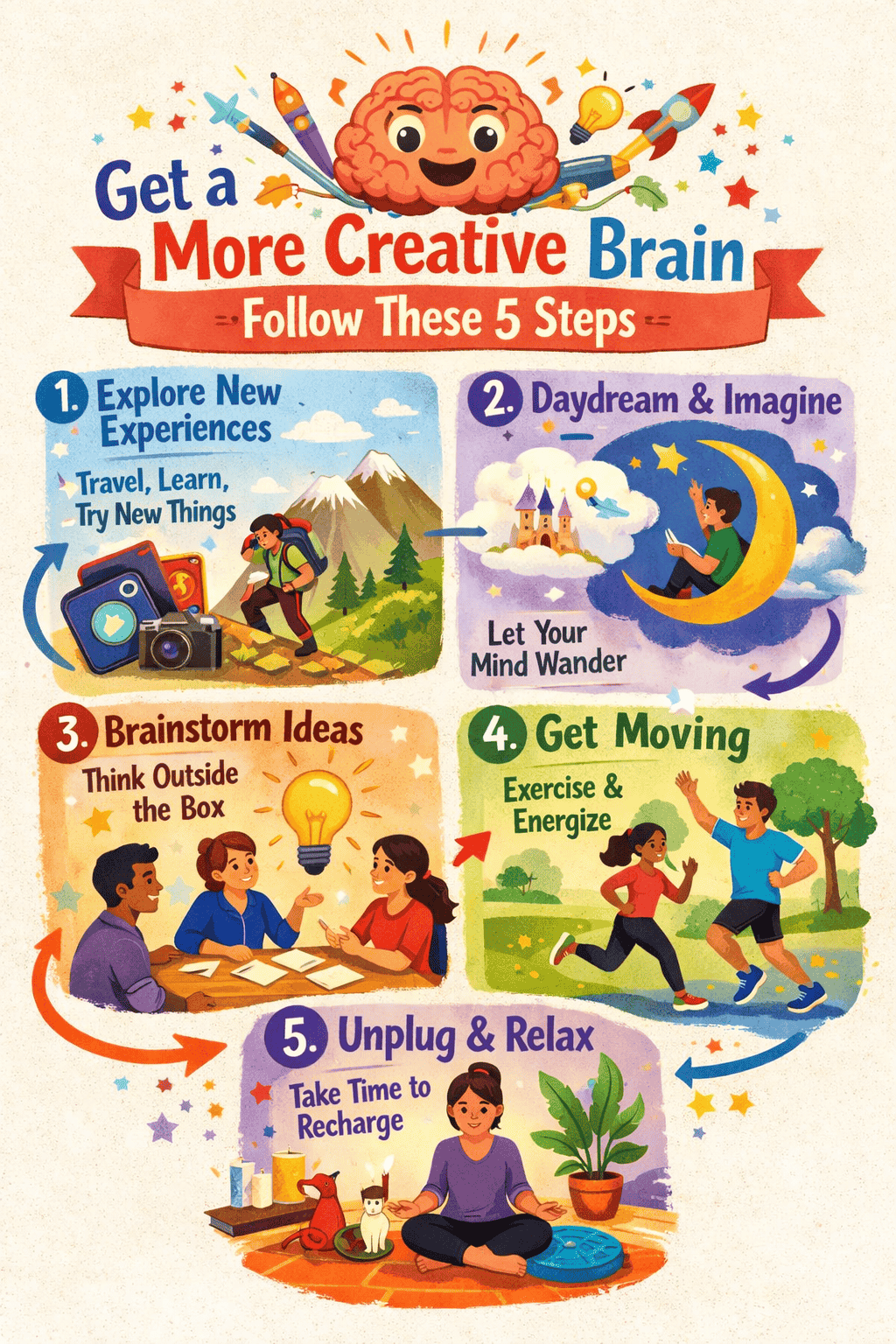
Most great ideas have the same process of creation This article will explain how this process operates. It is essential to understand this since creative thinking is among the most beneficial capabilities you have. Every problem you encounter at work or in your daily life can be solved with innovative ideas, creative thinking and imaginative concepts.
Anyone can become creative using these steps. But, it’s not that being creative is a breeze. Finding your creative talent requires the courage and plenty of repetition. But, this five-step process can help to understand the creative process and help illuminate the way to more creative thinking.
To show how this process works I’ll tell you an account of a story.
A problem that requires an Creative Solution
In the 1870s newspapers and printers were faced with a specific and expensive issue. Photography was a brand-new and exciting technology in the era. The public were eager to see more images but no one was able to determine how to print pictures quickly and affordably.
For instance If a newspaper wanted to publish an image during the 1800s, it would have hire an engraver create a replica of the image on an iron plate manually. The plates would transfer the image onto the paper and break after only a few times. This method of engraving, as you could imagine was quite time-consuming and costly.
The person who came up with the solution to this issue was identified as Frederic Eugene Ives. He became a pioneer in the field of photography. He was the holder of more than 70 patents by the time he retired. The story of his creativity and ingenuity that I will tell right now, is an excellent example to understand the five essential steps of creativity.
Then a Flash of Insight
Ives started his career as a printing apprenticeship within Ithaca, New York. Following two years acquiring the basics of printing He was able to manage the photography lab at Cornell University. He stayed for the remainder of the decade exploring innovative photography techniques and gaining knowledge about printers, cameras and optics.
It was in 1881 that Ives was able to see a glimpse about a better printing process.
“While working on my photostereotype machine in Ithaca I was examining the issue of halftone processes,” Ives said. “I lay in bed in a state where I was in a brain fog about the issue at the time I awoke the next morning, I I saw, as if projected on the ceiling the fully worked-out process and equipment operating.”
Ives swiftly translated his idea into reality, and patent his method of printing in 1881. He continued to work throughout the decade perfecting the process. In 1885, he created a simpler process which produced more efficient results. It was called the Ives Process, as it became known as, cut costs of printing by fifteen times. It was the most widely used printing method throughout the following 80 years.
Let’s talk about the lessons we can take from Ives on the process of creating.
The 5 stages that comprise the Creative Process
In 1940 an advertising executive by the name of James Webb Young published a brief guide called, A Method for Creating Ideas. In the guide he wrote a brief but powerful statement on creating creative ideas.
According to Young creative ideas come about when you create new combinations of elements from the past. In other words, innovative thinking doesn’t mean creating something entirely new from scratch instead, it’s about using what’s already there and combining the pieces and pieces in the way that has never been previously done.
The ability to create new combinations is contingent on your ability to discern the connections between ideas. If you are able to create an entirely new connection between two concepts You have been imaginative.
Young believed that this kind of connection to the creative process always took place through five stages.
- Find new information. At first, you will learn. In this phase, you concentrate on) studying specific materials that is directly relevant to your work and) mastering general knowledge by becoming enthralled by various concepts.
- Be sure to thoroughly review the material in your head. During this stage it is the time to review what you’ve discovered by examining the facts from different angles, and trying to put different ideas together.
- Take a break from the issue. Next, you get the problem off your mind and do something else that energizes you and excites you.
- Let your thought come back at you. At some point however, only after you’ve put aside any thoughts about it, your thought will return to you in the spark of clarity and renewed enthusiasm.
- Form and refine your concept based on comments. For any idea to be successful, you need to let it out into the world, expose it to scrutiny and then modify it if needed.
The Concept is to put it into Practice
The process used to create in the work of Frederic Eugene Ives offers a an excellent example of the five steps that are in play.
In the beginning, Ives gathered new material. He worked for two years as a print apprentice, later, four years managing the photography lab in Cornell University. This experience have given him plenty of data to use and create connections between printing and photography.
Then, Ives began to mentally review everything he had discovered. In the year 1878 Ives had spent almost every minute of his life experimenting using new methods. He was always tinkering and trying out different ways of connecting ideas.
The third, Ives stepped away from the issue. In this instance Ives went to bed for a while before the moment of insight. The process of letting creative issues sit for a longer period of time could be beneficial as well. No matter how long you take off, you must to find something that is interesting to you and keeps your attention off of the issue.
Fourthly, his thought came back to him. Ives was awake in the morning with his solution for his dilemma laid out in front of him. (On an individual note, I’ve noticed that a lot of that ideas for creative thinking pop up in my head when I’m lying in bed to sleep. If I give my brain the permission to rest throughout an entire day, the answer will come easy.)
In the end, Ives continued to revise his concept for years. He actually made improvements to several aspects of the process that and filed a new patent. This is a crucial element that is often not considered. It’s easy to get smitten by the first version of your idea but the best ideas are always evolving.
Creative Process in Short Stories: Creative Process in Short
The process of creativity is the process of creating new connections between ideas. Therefore, we can say creative thinking is the process of understanding the relationships between ideas.
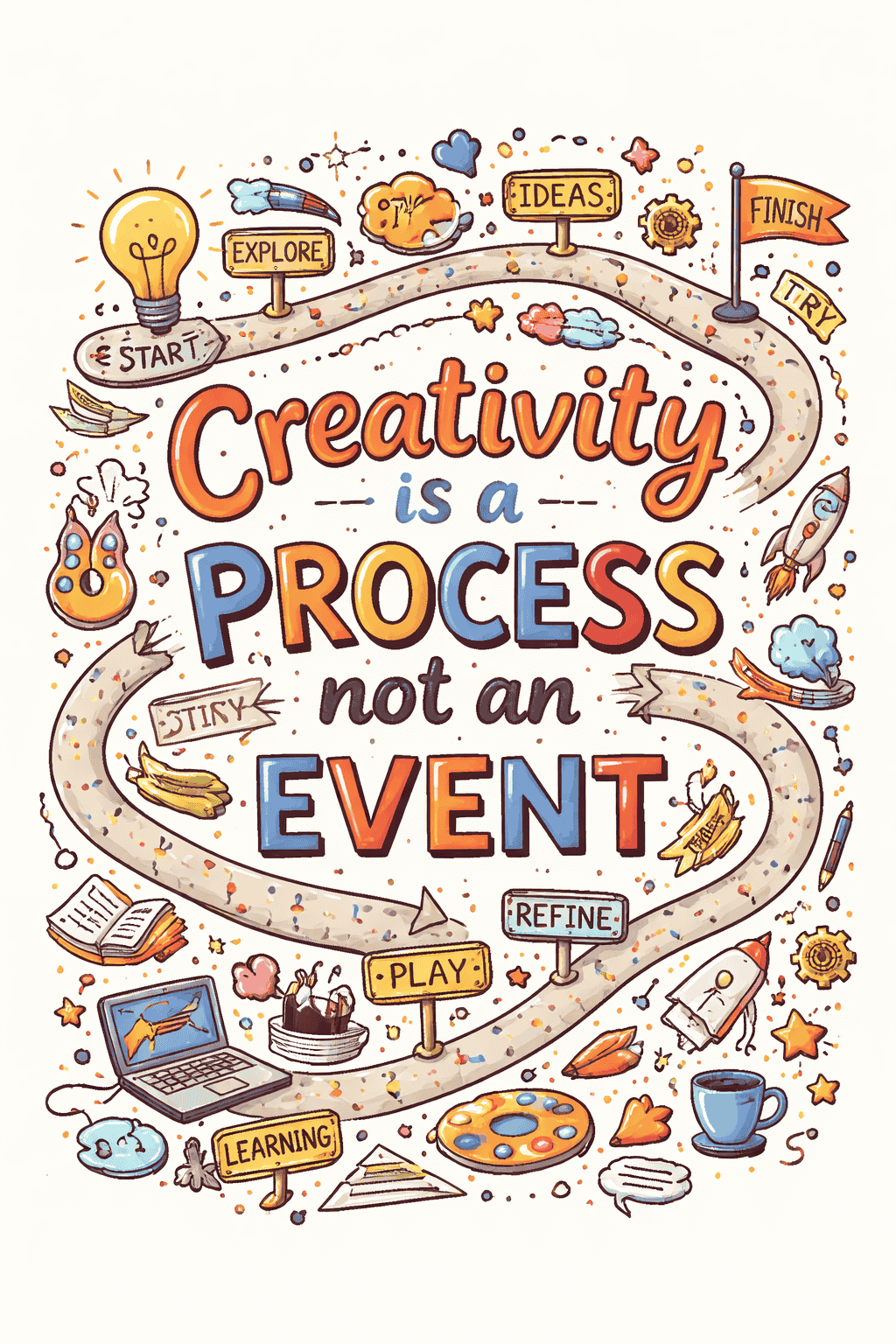
A way to tackle creative problems is to follow the five steps process of 1)) collecting material, 2)) deeply reworking the idea in your mind 3.) taking a break from the issue, 4) let the idea return in a natural way, and 5)) trying your idea out on the ground before making adjustments based on feedback.
Creativity isn’t just about becoming the initial (or the only) person to have an idea. In reality, creativity is connected ideas.
Thank you for reading. You can find more practical ideas by signing up to my popular newsletter. Every week, I send 3 ideas I’ve got from me and 2 quotes from other authors and one thought-provoking question. Over 3,000,000 people subscribe. Join us now by entering your email address and join us.
About the Author
James Clear writes about the importance of habits, decision-making and the continuous improvement. James Clear is the author of the number one New York Times bestseller, Atomic Habits. This book is sold more than 25 million copies around the world in over 60 countries. It has also been translated over 60 languages.

![Best Smartphones Under $500 in [2025]](https://www.fakoa.com/wp-content/uploads/2025/06/Best-Smartphones-Under-500-in-2025.jpg)